(Sorry for the late update but I have finally gotten my act together to talk about this day)
This was the last long stretch of a hectic but joyful first week!
In the morning we learned about Materials….who would have ever thought I would be teaching about that? Pro (and seemingly obvious) tip: pick topics that you are knowledgeable about to teach. There are so many cool experiments involving materials, which is why I wanted to cover it, but not going to lie, the night before this class was one of the biggest crams of my life. And the topic that I became super interested in, superabsorbent polymers in diapers, I didn’t even get to teach because we were short on time! That’s probably for the best though, because I asked our student Cindy if she thought learning about diapers was weird, and she said, “yeah…”. On the bright side, she followed that up with, “…but now I’m curious about it,” so maybe I’m not the only one who thinks that cutting up a bunch of diapers is super cool! Maybe an activity for later years (or not; I’m a little triggered by any mention of diapers now).
We always end up planning more content than we can actually get to for each of the modules. I think this happens because the vocabulary takes longer than expected. Our students have varying English capabilities, which makes teaching in English challenging but definitely not impossible.
Each day, the part of preparation that brings me the most stress are the translations. I can speak Chinese because my parents are from China, but I am sadly very illiterate and also do not know many science-y words, which gave me a lot of studying to do as well. So doing the translations for our presentations is stressful because I don’t always know the correct words and can’t always trust Google Translate. My mother actually helped A LOT with the translations—shoutout to her for being the best! ❤ I kept my little notebook to write in during class just as the students did and can definitely relate to having trouble remembering all of the vocabulary words. I’m glad I was learning more Chinese while they were learning English because it helped me see from the eyes of a student and not just those of a teacher. I also got a lot closer with the students who speak Chinese because I would help translate for them, and our shared language gave us a bond as well.
Some students did give us feedback that the way we teach English vocabulary words could be improved. For sure, the technical words do not stick easily for many students. For example, the day after teaching them about atoms and molecules, we asked them what they were, and only a few remembered the English words. It’s totally understandable, since we are throwing a lot of content at them. However, the majority are really interested in improving their English, so the hope is that this exposure to English at least helps, although we are always looking for better teaching methods. I don’t know what I would do without Sheila and Sarah, our excellent Korean speakers, who always translate. We have found that repetition is key, which fits well into the theme of polymers (because they repeat…heh).
For the Materials module, I really tried to emphasize the concept of monomers repeating to make up polymers, but it’s always hard for me as a teacher to gauge whether the students are comprehending or not. Especially given our classroom setup, where the other teachers are at individual tables helping translate and explain, there are always people talking and writing while the teacher at the front of the room is explaining concepts.
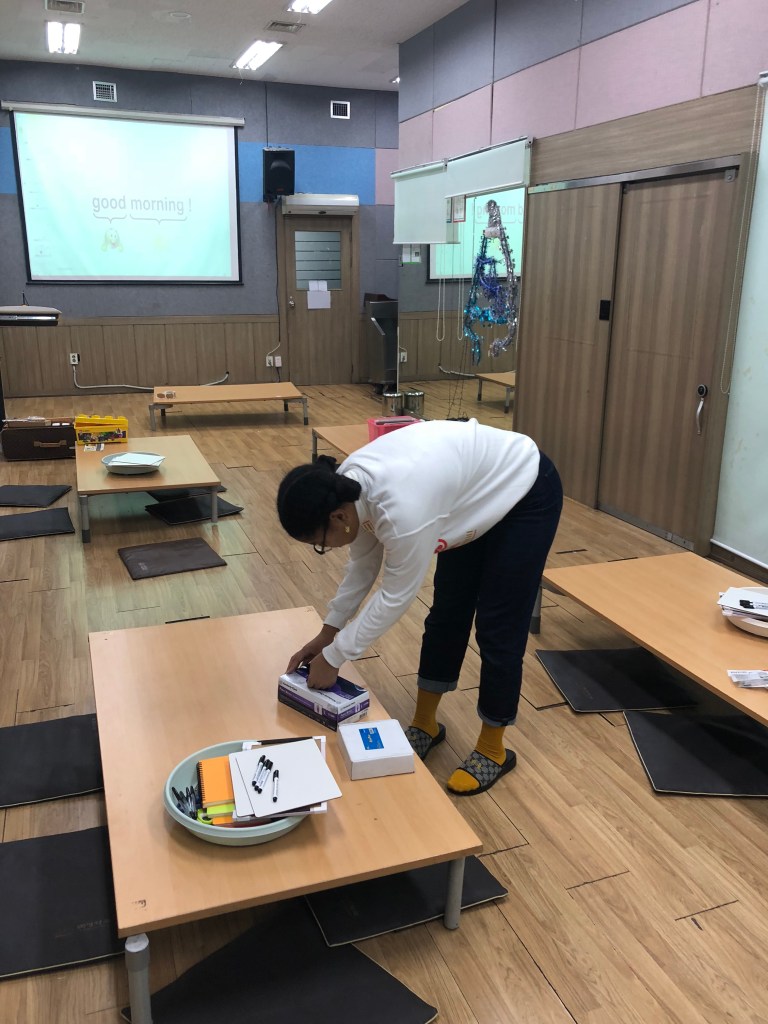
Since materials are all around us, I wanted to introduce the idea of plastic being a polymer and also discuss the environmental impacts of plastic. We had the students discuss whether plastic was a necessary evil or something we should try to get rid of, and we had two students share their opinions (in English!) from both sides of the spectrum. I wish we could teach them some more about environmental science, but Sheila brought up a good point when I suggested this—how do we make learning about our (dying) planet less sad?, especially for these kids, where the last thing they need is a sense of hopelessness.
So I briefly concluded the discussion by describing both plastic’s usefulness and harm to the environment, and then ironically had them make plastic. The first activity was epoxy resin—a liquid mixture consisting of two parts: resin and hardener. The day before, I ran over to Euljiro-4-ga, where there is a large chemical district, and bought a ton of epoxy resin from a very kind ajusshi who dealt with my horrible Korean. When the resin and hardener are mixed in the correct proportion, you can turn this liquid into a hard plastic. When using epoxy resin, use the following precautions: 1.) wear gloves 2.) be very precise when combining the resin and hardener and check your resin’s specific ratio 3.) mix the two slowly to avoid getting air bubbles 4.) cover your workspace and protect any clothing from contact with resin 5.) beware the resin fumes!! Definitely have good ventilation.

You can make amazing art with epoxy resin, and I was super excited for the students to create with this material. We used silicon molds to make paperweight-size objects. The activity was super hectic though because we had a limited amount of measuring tools, the teachers had to carefully monitor the students’ combining of the resin and hardener (it will fail with the wrong proportions), and we also had to avoid getting the very sticky resin anywhere. So as usual, there was lots of hurried running around and high-strung nerves. However, the resin projects were all beautiful!! We have many artistic students, who arranged objects in their resin meticulously.
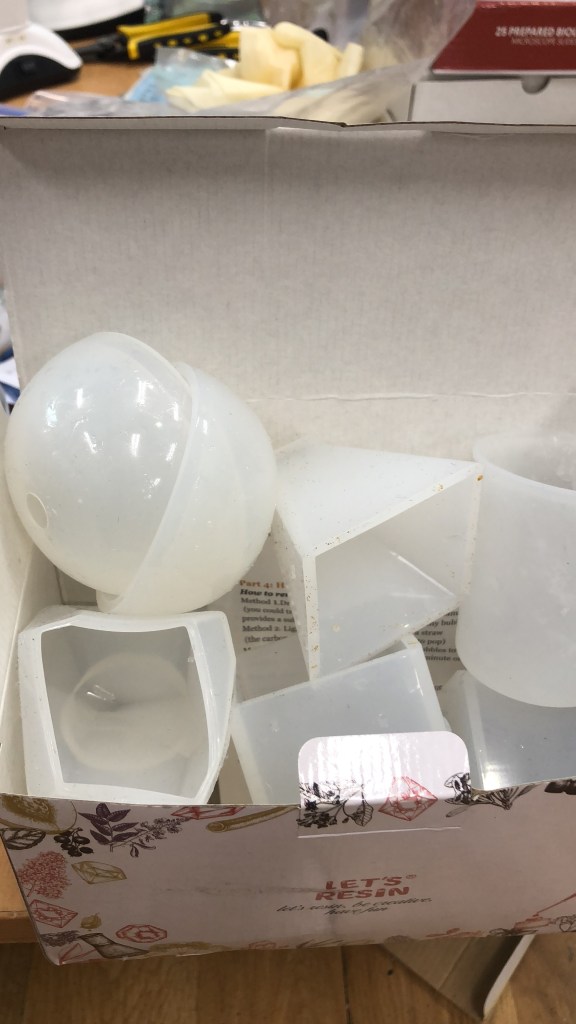
silicon molds 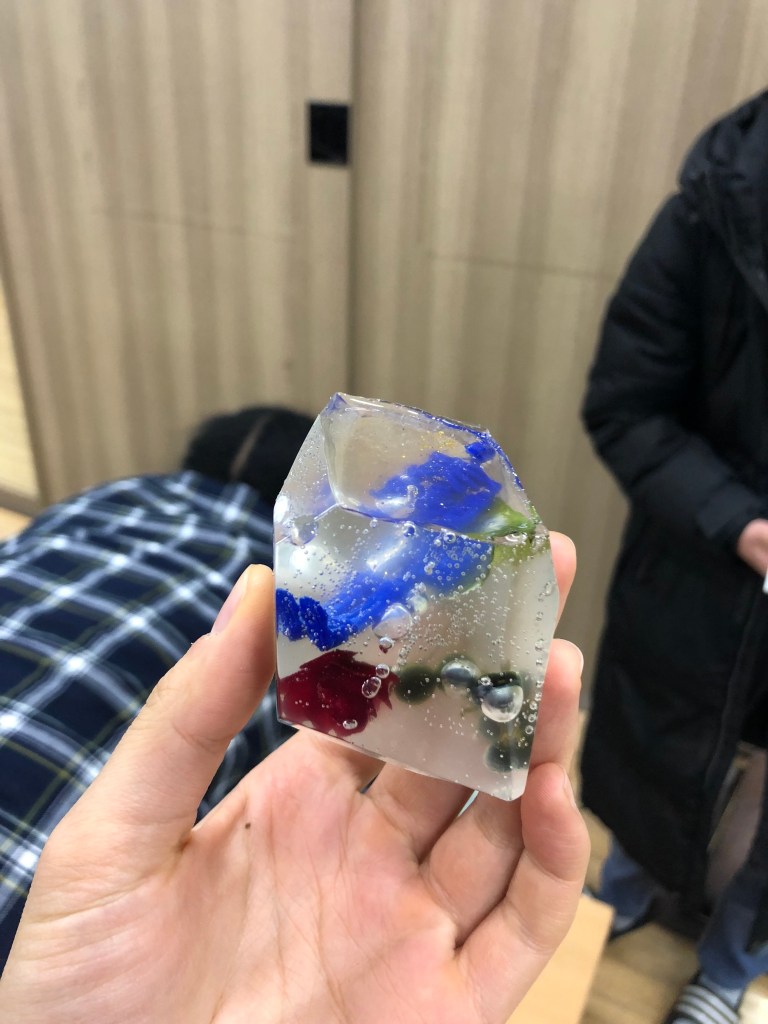
Epoxy example with blue 3d printed skeleton inside 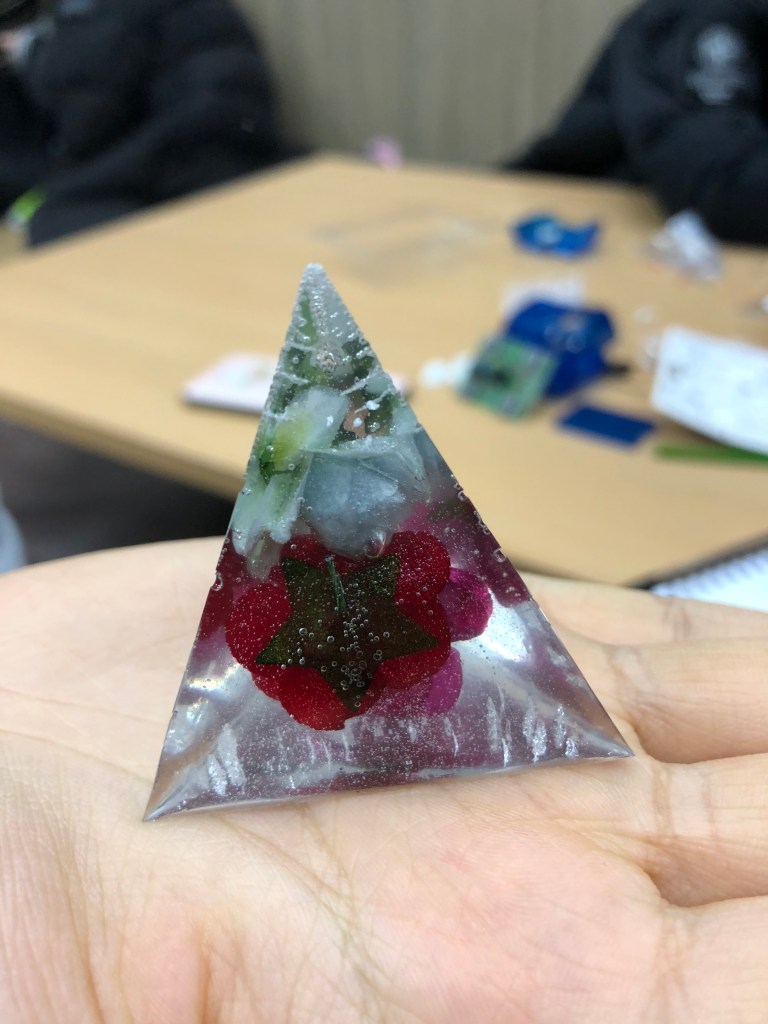
Anothe epoxy example! 
All students’ epoxy creations:)
The day before, we asked students to bring in anything they might want to preserve in the resin. Some students brought in flowers, toys, little plushies, and more! One student even used the skeleton he 3D printed to put into the resin. We also had a lot of other materials that they could use. The epoxy resin we used hardens in 5-6 hours, so by the end of the day, the students could see their wonderful creations, but we kept them at the school over the weekend just to be extra sure that they had appropriately hardened.
From our mistakes, we learned that you shouldn’t put watery things in the resin: we used air freshener bubbles to put inside, and they all were so heavy that they fell out of the resin mixture. Us teachers also tried to put an uncooked egg in the resin, but because the egg white was less dense than the resin, it wouldn’t go in, and the egg kind of just floated on the surface of the resin—sad.
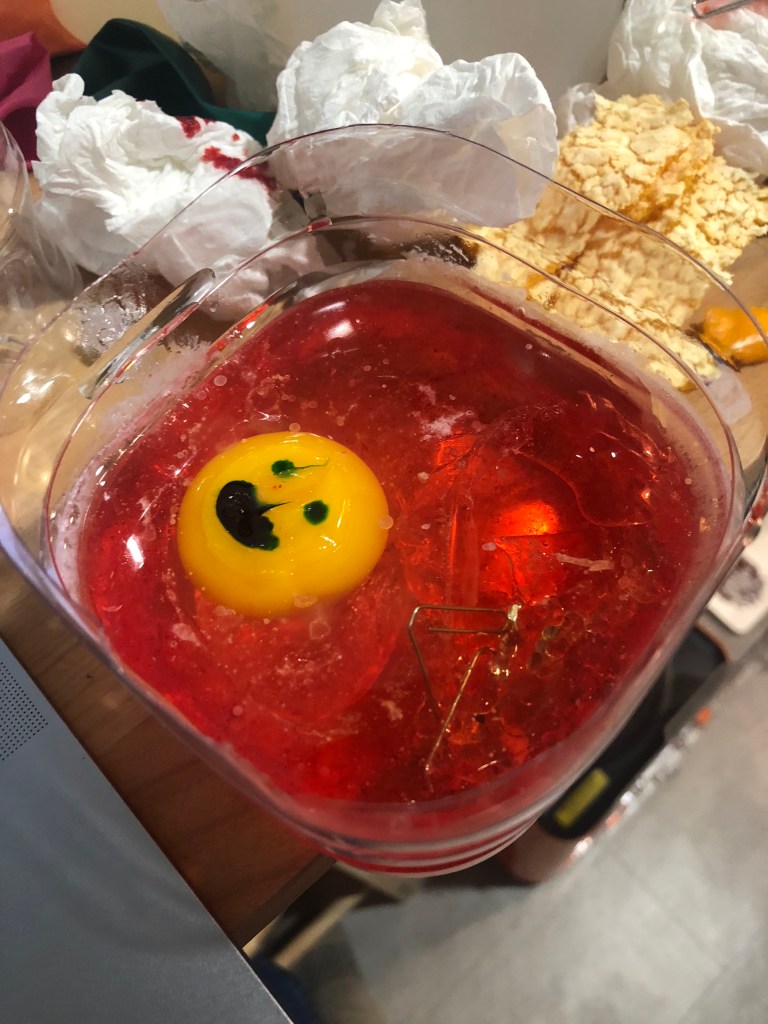
our memey eggy resin
Our second activity was making polymer bouncy balls out of borax, glue, and water. The main concept I hoped they would take away from this is that the borax and glue chemically react to create polymer structures that cause bounciness. Originally, we planned to have our students make many different bouncy balls with different amount of borax, glue, water, and even trying to add potato starch. However, because of the time crunch, we just had our students do one combination of the ingredients and then play around to try to create the best possible bouncy ball. Once we took out the measuring tape and made it a competition, everyone suddenly became more invested—especially Mark, who ended up as the final winner for highest bounce! And with that, Materials, the module that had been worrying me for so long, was finished!

In the afternoon, we had the students do the egg drop activity given a bunch of random supplies and an “egg-stronaut” that they had to deliver back to Earth. We split them into groups of two, and everyone got really into the activity, going all out with straws, tape, balloons, and more! We teachers made our own contraptions as well: Sarah and I were one team while Sheila and Lexi were one team. To test the students’ creations, we had them drop them from the roof of the school. Amazingly, even from this extremely tall height, some teams survived the fall with completely unharmed eggs! On the other hand, both teacher teams’ eggs cracked…but those who made good use of triangle shapes and balloons were the ones that fared well.
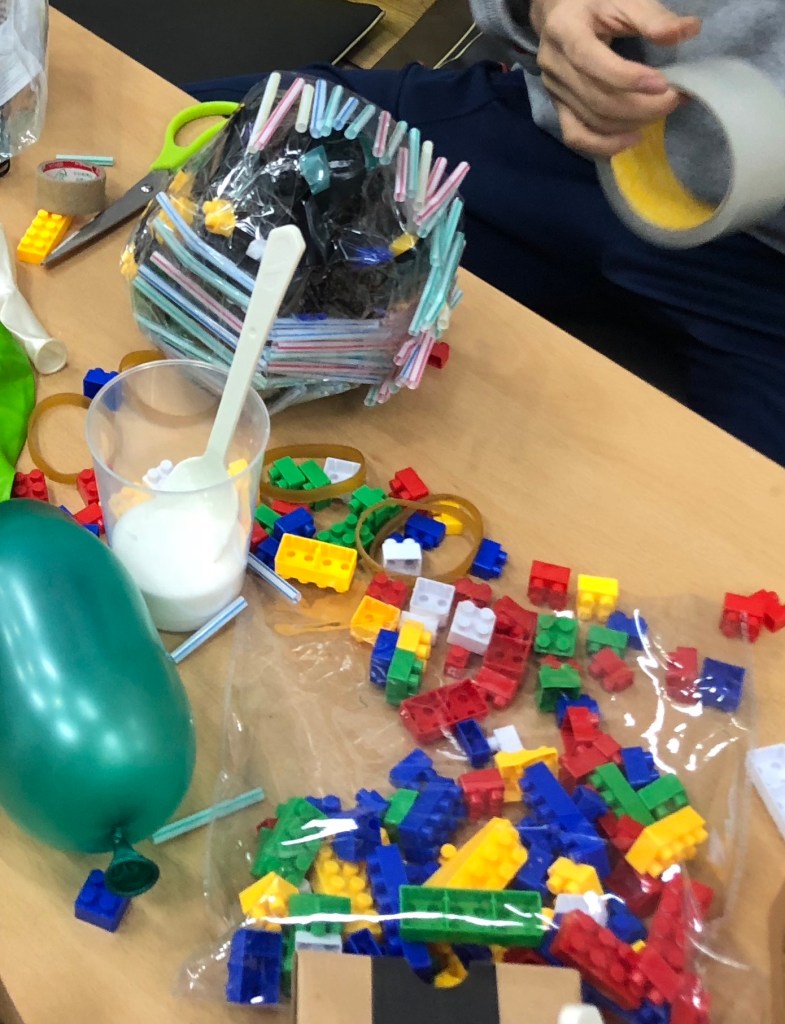
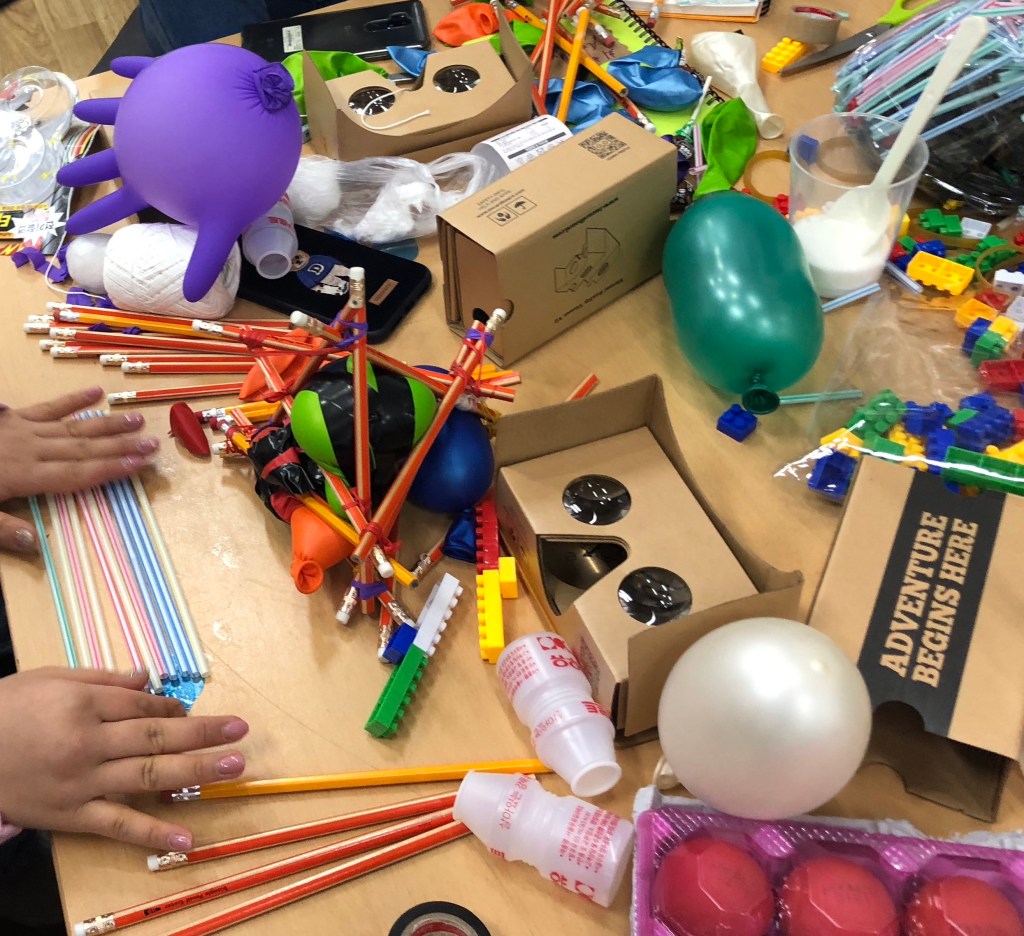
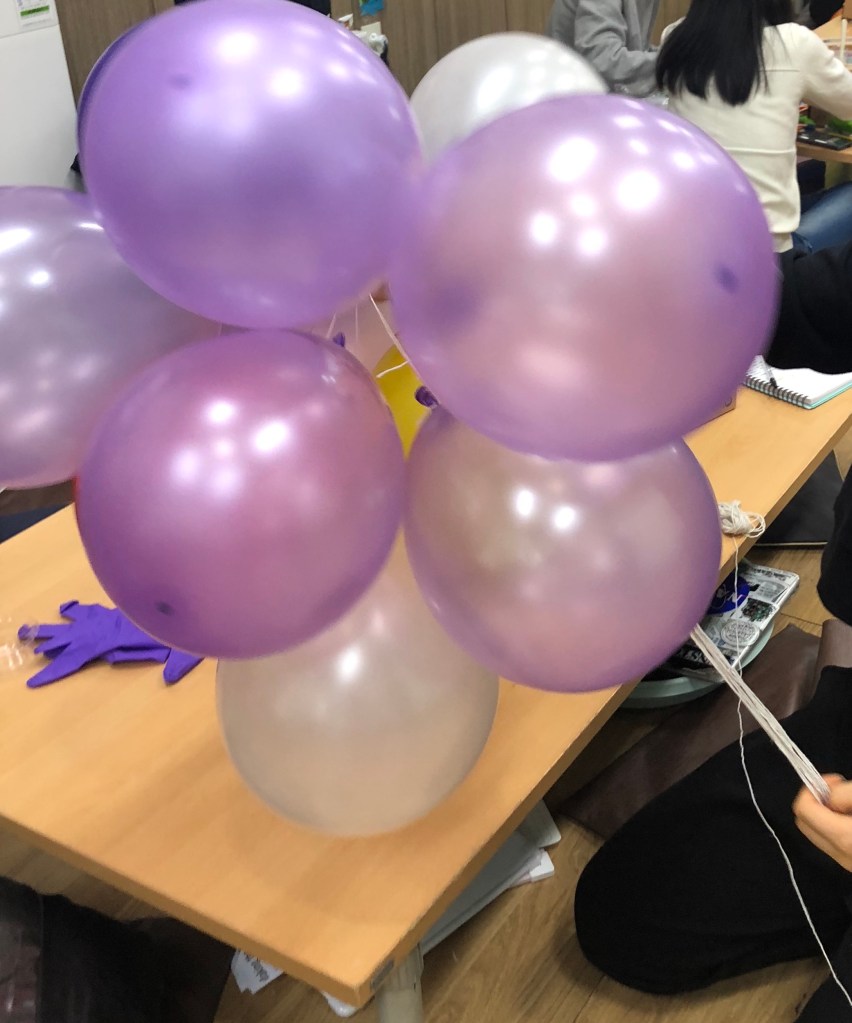
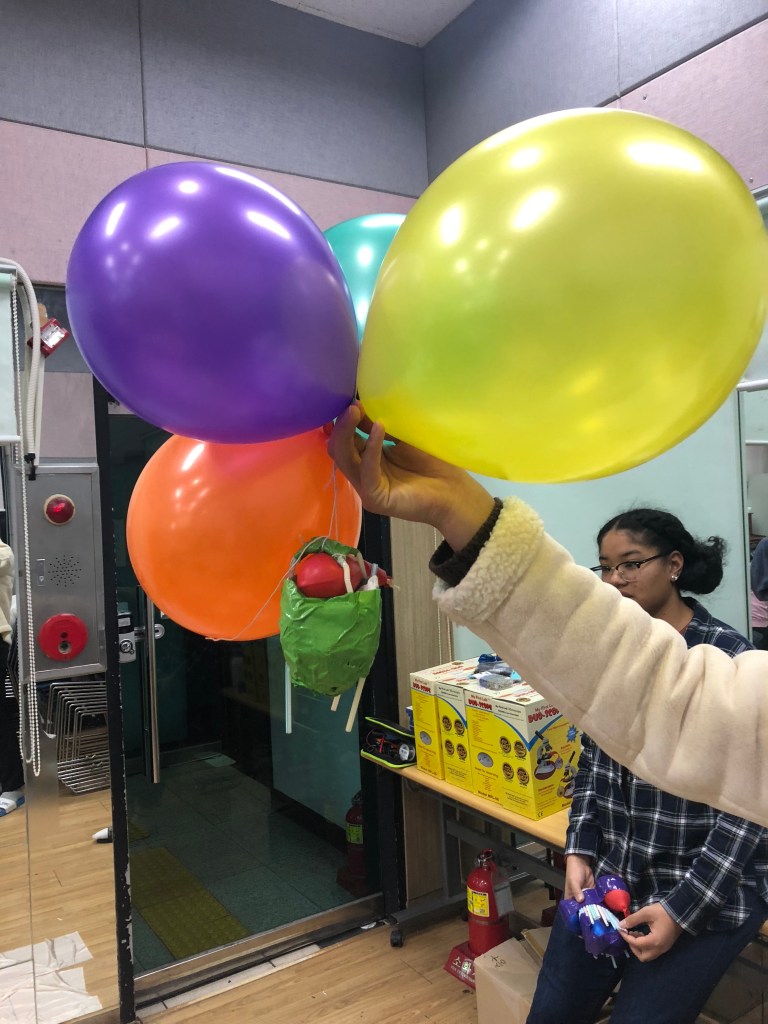


from the rooftop!
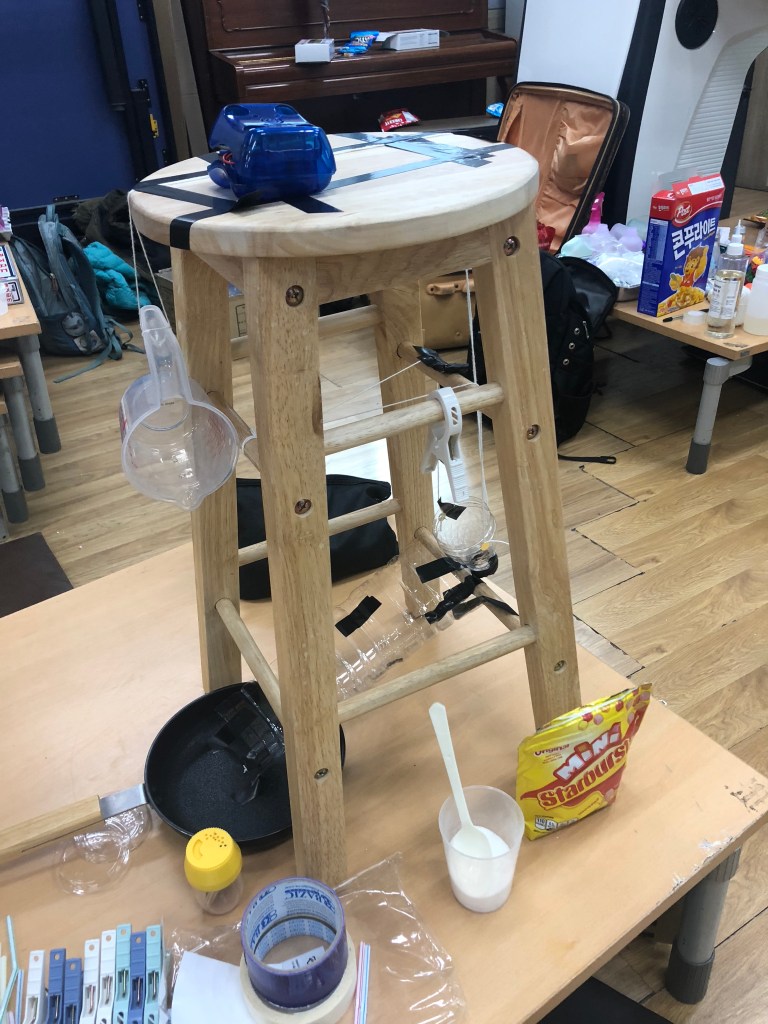
Poor Sheila stayed up the night before preparing a Rube Goldberg machine (with the help of Sarah and Lexi), but we did not even get to do the Rube Goldberg module because we spent more time on English. We watched a clip from The Martian (Sheila’s favorite movie, very on-brand) and discussed with our students in English. The conversation drifted from the movie content to more of just a normal conversation, which was good practice for the students to finally practice using words more relevant than “polymer.” Afterwards, Sheila taught about paradoxes, which was super interesting. Paradoxes are so hard for me myself to wrap my head around, but Sheila, our physics goddess, was the perfect person to teach. Ideas we had the students contemplate included: “what would happen to the relative size of objects if you travelled at the speed of light?,” “would an ant crawling on a rubber band ever reach the end of the rubber band if the rate of stretching the rubber band was greater than the ant’s speed?,” and “what is the total from endlessly summing small numbers?. “ So with these meta thoughts, the first week of workshops was finished!
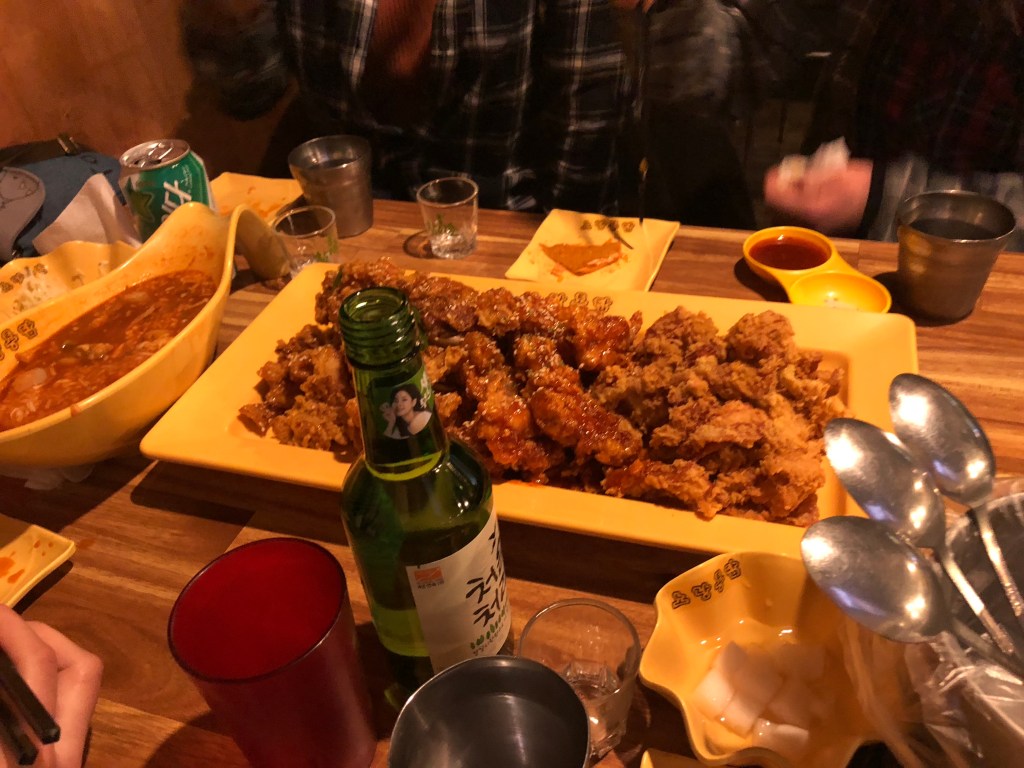
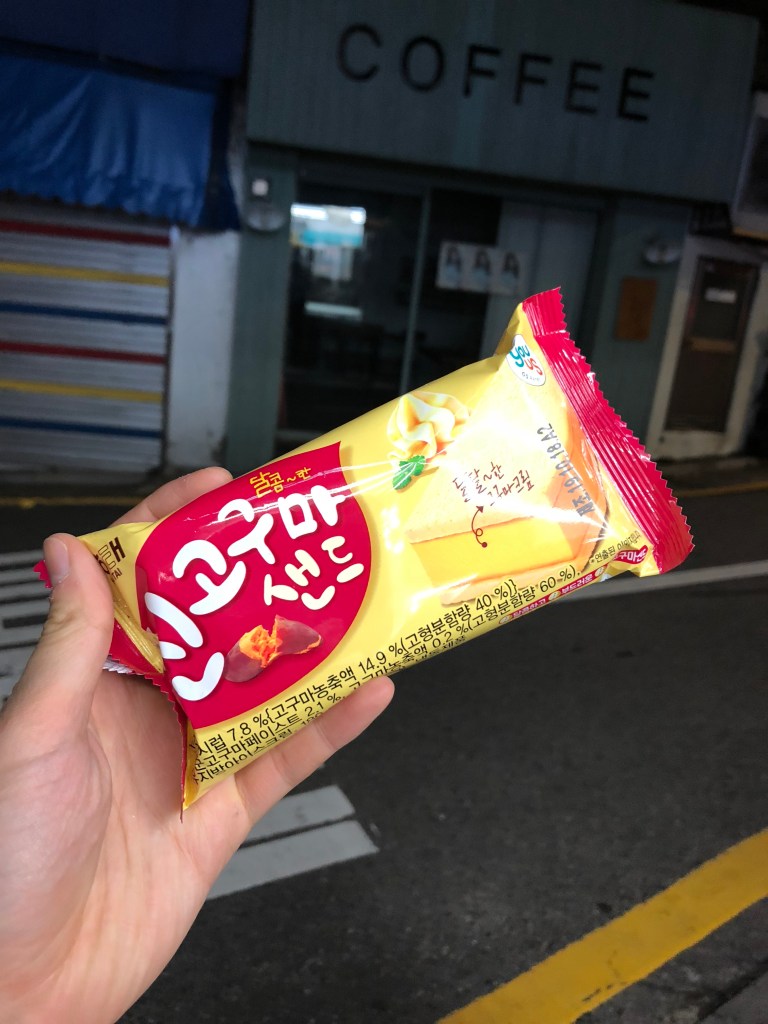
To celebrate, we bought soldering irons from Yongsan and ate fried chicken in the area—our first in Korea! Our taste buds were further blessed on our way back home, when we each grabbed a celebratory ice cream from the local GS25. I of course opted for a sweet potato flavor. A sweet ending to a sweet week 🙂
 GTL Korea 2020